

We cannot talk about cooking rice properly without talking about stock. Before the grain, before even the sofrito, there is one element that defines the final result of any rice recipe: the stock.
In professional kitchens, however, we do not simply speak of “broth” or “stock” without distinction. We speak about culinary stocks. And it is important to understand the difference. Stock is the technical base, the starting point. A good stock is made with protein, vegetables, and aromatics. Broth is that stock already refined, adjusted, and seasoned for a specific dish. Now that you know the difference, throughout this article we will use both terms interchangeably to make things easier for the general reader.
At Arroz Tartana, we believe rice is much more than an ingredient. It is culture, technique, and tradition. And we understand that no great stock can be achieved without the right cooking methods and without respecting the correct processes. If you are already experienced with rice dishes, you will know this well. If you are a beginner, keep going — with practice and experience, you will achieve spectacular stocks.
Why stock is (almost) more important than rice
It may sound provocative, but it is a culinary truth: you can have the best rice in the world and ruin it with a poor stock.
Stock as the main ingredient
Rice has a remarkable capacity to absorb flavour. It does not provide much flavour on its own; instead, it acts as a vehicle. It absorbs the stock, integrates it, and transforms it.
That is why, when we talk about rice recipes, we are really talking about how that stock transfers into the grain.
A good stock must fulfil three key functions:
- Provide clean and defined flavour
- Balance intensity with subtlety
- Integrate with the rice without overpowering it
If the stock is unbalanced — too strong, too salty, or too flat — the rice will show it immediately.
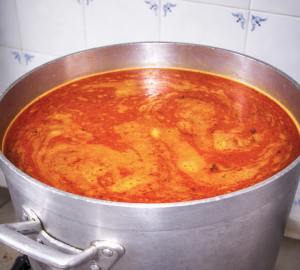
Cooking techniques: the basis of every good stock
You cannot make a good stock without understanding how it is cooked. In professional kitchens, there are three essential systems that determine the final result.
Cooking by concentration
Ingredients are cooked directly in contact with heat, usually with the help of fat (normally extra virgin olive oil). The goal is to brown, caramelise, and concentrate intense aromas.
Examples: grilled foods, pan-seared foods, fried foods, oven-roasted foods.
Cooking by expansion
Ingredients are cooked covered in liquid (usually water), gradually transferring their flavours and aromas into it.
Examples: fish fumet, traditional stew, boiled dishes.
Mixed or combined cooking
This is the key technique for rice dishes.
First, the ingredients are browned (concentration), and then liquid is added to continue cooking (expansion). This creates deeper, richer, and more balanced stocks.
For example: browning food first, then simmering it in the same pan, as happens in paella, seafood stock, or golden and dark stocks.
Types of stocks
Not every rice dish needs the same stock. Just as not every ingredient needs the same treatment, the stock must adapt to the recipe.
Fish, meat, and vegetable stock
Stocks are mainly grouped into three large categories:
Fish stocks (Fumet)
These are the base of seafood rice dishes. They are made with rock fish, bones, and shellfish. They are more delicate and require shorter cooking times to avoid bitterness.
Meat stocks
Used in inland rice dishes or traditional paellas with chicken, rabbit, or duck. They are richer and need more time to extract their full flavour.
Vegetable stocks
They provide freshness and lightness. Essential in vegetable rice dishes or as support in mixed stocks.
What you need to know is that every good stock, whatever type it may be, should always contain three elements:
- Protein (meat, fish, or vegetable equivalent)
- Vegetables
- Aromatics
Want to learn how to make seafood stock? We will show you below.
How to make seafood stock step by step
Seafood stock, or fish stock, is one of the most commonly used in rice recipes.
Basic ingredients
- Rock fish for stock
- Fish bones (monkfish, for example)
- Shellfish for stock: crabs, tiny shrimp, and other small shellfish
- Onion
- Garlic
- Ripe tomato
- Sweet paprika
- Bay leaf
- Black peppercorns
- Parsley
- Extra virgin olive oil
- Water
(Optional: leek and carrot)
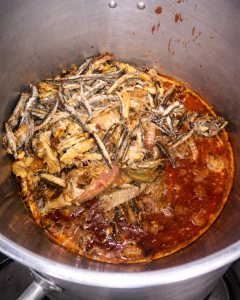
Method
Prepare the ingredients
Clean the fish thoroughly and cut into small pieces. Do the same with the vegetables.
Brown the fish and shellfish
In a wide pan with olive oil, brown the ingredients in batches. Do not overcrowd the pan — they must brown, not boil. Reserve in a stockpot.
Sauté the vegetables
In the same pan, brown onion and garlic. Once golden, add paprika (off the heat or over low heat), then quickly add grated ripe tomato. Reduce until concentrated.
Combine everything
Add the sofrito to the stockpot with the fish. Add aromatics such as bay leaf, black peppercorns, and parsley stems.
Add cold water
Suggested ratio: 1 part fish and vegetables to 2 parts water.
Controlled cooking
Heat over medium heat until almost simmering. Keep like this for a maximum of 30 minutes, without boiling, to avoid unpleasant odours.
Rest and infuse
Turn off the heat and let it rest until the stock cools to around 70ºC / 158ºF. This allows flavours to settle.
Strain and cool
Strain and cool quickly until ready to use.
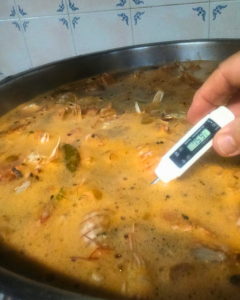
Meat stocks: depth and structure
For meat rice dishes, it is ideal to use the same proteins that will appear in the final dish: chicken, rabbit, pork, or combinations.
This guarantees flavour consistency.
Intensity vs lightness
If we cook only by expansion (like a stew), flavours will be softer. However, for paellas or baked rice dishes, mixed cooking is recommended:
- Brown the meats
- Add the liquid
- Simmer until the desired flavour is reached
Cooking times vary:
- Tender meats (chicken, rabbit): 20–25 minutes
- Tougher meats (pork, duck): minimum 60 minutes
Ratios and balance
One of the most common mistakes when learning how to cook rice is failing to control stock intensity. A stock that is too strong can overwhelm the rice. One that is too weak will leave it bland. As always, the key is balance.
A good stock should be:
- Flavourful, but not aggressive
- Aromatic, but clean
- Concentrated, but not heavy
Remember: rice reduces that stock during cooking. Everything intensifies.
Common mistakes when making stock
Promoting rice culture also means understanding what not to do.
How to avoid mistakes
Overboiling
A strong boil clouds the stock and damages its balance.
Not browning ingredients when necessary
Skipping the concentration stage removes depth.
Overloading with ingredients
More is not always better. Too many ingredients confuse flavour.
Ignoring cooking times
Every ingredient has its perfect point. Overcooking is also a mistake.
Stock as part of rice culture
At Arroz Tartana, we do not only talk about rice recipes. We talk about everything behind them. How many times have you used fresh ingredients and excellent rice, only for your seafood paella to taste bland or overly intense? Stock deserves as much importance as any other ingredient, and that is something we want to share with everyone interested in rice culture.
This article has been written with the invaluable collaboration of the great rice expert Juan Carlos Galbis, an undisputed reference in contemporary Valencian cuisine.