

Rice drying: how the grain changes after harvest
What happens to rice once the harvest is over? Is it ready to reach the kitchen, or is there still a lot of work to be done?
Harvesting marks the end of one stage in the field, but also the beginning of another equally important one: drying. At this point in the rice-growing cycle, the farmer’s skill, expertise and experience are essential once again. Knowing when to harvest each variety, monitoring the grain’s moisture content and drying it carefully are all necessary to preserve its characteristics and, above all, ensure the culinary quality of the rice.
At Arroz Tartana, we have spent generations learning to recognise these timings. Our great-great-grandparents passed down their knowledge from one generation to the next, teaching us the importance of every stage in the rice-growing cycle. Today, Juan Valero, the fifth generation of our family dedicated to rice cultivation, will share everything he knows about rice drying with you.
What happens after harvesting: from the field to the drying facility
Harvesting is one of the most important stages in rice cultivation. Knowing when to harvest requires experience, observation and continuous monitoring of the plant’s ripening process. If you are curious to learn more, we tell you all about it in this article.
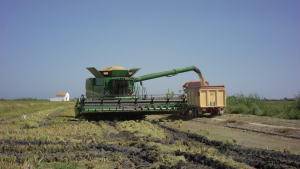
Each variety has its own timing and characteristics. That is why farmers need to monitor how the grain develops and determine when it reaches the right level of maturity and moisture content for harvesting. The reality, however, is that conventional farmers sometimes have little choice but to harvest their rice directly from the field when it is as dry as possible. The main reasons are the cost of drying and the lack of additional payment for higher quality.
At Arroz Tartana, however, we grow distinctive rice varieties prized for their culinary qualities and monitor them closely from the moment the panicle begins to emerge until harvest. We carry out regular checks to assess the grain’s maturity and moisture content, aiming to harvest each variety at the most suitable moment.
Once the rice has been harvested at the right moisture level, we prepare the grain for the next stage: drying.
Why rice drying matters: preservation and quality
Rice drying basically involves removing moisture from the grain in a controlled way so that it can be stored safely while retaining its properties.
In the past, rice was dried in the sun. On the threshing floors scattered throughout the marshlands of l’Albufera de València, farmers spread the rice over large surfaces or mats and regularly turned it with rakes to ensure even drying. The work required great care. Farmers would even go barefoot to avoid damaging the rice grains.

Today, drying rice in the sun would no longer make sense. The grain would have to be turned on the threshing floor using larger rakes pulled by tractors, which would break and damage it.
Nowadays, the process is carried out using mechanical hot-air drying systems, which allow moisture removal to be carefully controlled. The key is to regulate the process so that the grain dries gradually, avoiding sudden changes that could compromise its integrity.
At Arroz Tartana, we also dry our rice more slowly than usual, running it through the drying facility twice and, when necessary, even three times. This allows us to achieve gradual, controlled drying, inspired by the patience with which rice was traditionally dried on the threshing floors. Our aim is to improve the final quality of our rice.
Once dried, the rice needs a resting period. In our case, we allow at least a month and a half to pass before polishing the grain and preparing the product for market. During this time, the grain stabilises its moisture content and prepares for the next stages of processing.
Proper drying is also essential for preservation. If rice retains too much moisture, the risk of deterioration, microbial growth and changes that can lead to fermentation increases. Rice that has been dried properly and stored under suitable conditions retains its characteristics more effectively while it is stored in its husk and after processing and packaging.
How drying affects rice in the kitchen
Drying influences the integrity of the grain and helps preserve the culinary characteristics of each variety. That is why careful drying matters both for preservation and for the final result in the kitchen.
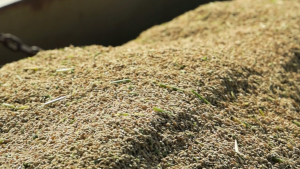
One of the first indicators of quality becomes apparent during rice processing. Properly dried grain tends to withstand dehusking and polishing better, helping to reduce breakage. The percentage of whole grains in relation to the total is therefore a useful reference when assessing the physical quality of rice.
Rice with fewer broken grains also produces fewer fine, floury particles. This is particularly relevant in dishes where controlling the texture of the stock is important and the grain needs to retain its consistency.
The aim is to preserve the qualities that make each variety unique: its ability to absorb flavours and aromas, its consistency, its creaminess and how it behaves during cooking. Every rice variety has its own characteristics, and drying is one of the factors that helps maintain them.
That is why assessing a culinary rice variety means looking beyond the appearance of the grain. The variety, growing conditions, harvest timing, drying, resting period and storage all form part of the same process.
Caring for rice from the field to the kitchen
As you have discovered, working with rice continues long after the harvest. Choosing the right moment to harvest it, monitoring its moisture content, drying it slowly and allowing it to rest are essential steps in obtaining a stable product and preserving the qualities of each variety.
At Arroz Tartana, we see this process as part of our craft and an agricultural tradition passed down from generation to generation. The experience of the people who grow the rice, combined with the care taken at every stage of processing, ensures that the grain reaches your kitchen — or the hands of chefs, professionals and foodies — in the best possible condition.
Did you know these facts about rice drying?