

How to store rice properly in summer, at home or in a restaurant
When we think about cooking great rice, we usually focus on the variety, the stock or the sofrito. However, all that effort can be undermined from the very beginning if the rice has not been stored correctly.
Rice is a very stable product, but it is still a food of plant origin. Like any organic product, it can deteriorate if it is stored under unsuitable conditions. Heat, humidity or poor ventilation directly affect its quality and, in some cases, can even encourage the appearance of insects.
At Arroz Tartana, we have been working with this cereal for more than a century, and today we want to show you how to store rice correctly, especially during the summer, whether at home or in a restaurant, so that it retains all its qualities.
As always, we have counted on the invaluable help of our great friend and collaborator Juan Carlos Galbis, master rice chef and one of the leading references in contemporary Valencian rice cuisine.
Rice is a living product
Although rice may seem like an almost unalterable food, it is still a natural product.
The grain is mainly made up of three parts:
- The husk, the outer coating that protects the grain while it develops on the plant and which is removed during the first husking process.
- The bran, the brownish outer layer that covers the grain.
- The endosperm, where the starch is concentrated.
The rice we usually find in supermarkets is white or polished rice. During processing, the bran—the outer layer surrounding the grain—is removed. This produces a more stable rice with a longer shelf life and a more consistent cooking performance.
However, although it is more stable than wholegrain rice, for example, it is not completely immune to poor storage conditions.

If rice is exposed to heat or humidity for several weeks, it can lose quality and even develop pests. That is why storing rice correctly is just as important as choosing the right variety. By the way, if you’re not sure which variety to choose for your paella, here’s an article explaining the key differences between Albufera and Marisma rice varieties.
The two biggest enemies of rice: humidity and temperature
Most rice storage problems have two main causes.
Humidity
Rice should always be stored in a dry environment. For short-term storage, the moisture content of the grain should not exceed 14%. If it is going to be stored for several months, the recommended moisture level is between 12% and 13%.
Although rice producers control these values before packaging, once the rice reaches our homes it is up to us to prevent it from absorbing moisture from the surrounding environment.
That is why it is important to keep the package tightly closed and away from damp areas in the kitchen.
Temperature
Heat is the other major enemy. When temperatures rise above approximately 16°C (61°F), the eggs of certain insects that are naturally present in the grain from the field may begin to develop, even though they are completely invisible when you buy the product.
The most common are:
- Rice weevil (Sitophilus oryzae)
- Angoumois grain moth (Sitotroga cerealella)
This explains why a package that looked perfectly fine when purchased may contain insects a few weeks later.
To help you preserve your rice in the short term, here are some practical tips for storing it properly at home and in professional kitchens.
How to store rice at home
The good news is that storing rice properly at home is very simple.
You only need to follow a few basic recommendations.
Store rice in an airtight container
Once you’ve opened the package, it’s best to transfer the rice to a container with an airtight seal.
This protects it from humidity, strong odours and contamination by new insects. Glass jars or food-grade plastic containers work perfectly.
However, keep in mind that transferring the rice to an airtight container immediately after purchase does not guarantee that there aren’t already eggs inside the grain, which could later develop into weevils or moths.
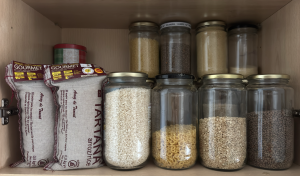
Choose a cool place
Ideally, rice should be stored in a cool, dry and dark place, with a stable temperature. Avoid cupboards next to the oven, the hob or windows exposed to direct sunlight.
During winter, a cool pantry is usually sufficient. In summer, it is advisable to take a few extra precautions.
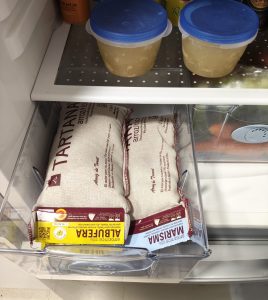
Should you keep rice in the fridge?
It may sound surprising, but when temperatures are very high—especially in warm regions such as the Valencian Community—a good option is to store rice in the refrigerator.
You don’t need to fill half your fridge. Simply buy reasonable quantities and keep the rice in sealed containers. The cold keeps the temperature below the level at which weevils and moths can develop.
Another excellent alternative is a domestic wine cooler, provided it maintains a stable temperature.

Don’t store more rice than you need
Buying large quantities of rice only makes sense if you can store them properly. For household use, it is usually better to buy rice more frequently and keep smaller quantities at home.
That way, you ensure the rice reaches your paella in the best possible condition.
How to store rice in restaurants
In the hospitality industry, proper storage is even more important. Restaurants handle large quantities of rice and need to maintain consistent quality throughout the year.
Good practices include:
- Store rice in dry areas.
- Keep temperatures below 16°C (61°F) whenever possible.
- Just as at home, store rice in refrigerated rooms or cold storage during the summer.
- Avoid sudden temperature changes.
- Use clean, tightly sealed containers.
- Apply proper stock rotation (first in, first out).
It is also advisable to inspect stored rice regularly to detect any issues before they affect the rest of the stock. Prevention is always easier than dealing with an infestation.
How to tell whether rice has been properly stored
Before cooking, it is worth taking a moment to examine the rice. High-quality rice should have whole grains, a uniform size, very few broken grains, a clean appearance and an even colour.
If you notice a large number of broken grains, excessive dust, signs of moisture or insects, the safest option is not to use it. You wouldn’t want to ruin your paella, would you?
Common mistakes when storing rice
By now, you know our recommendation for storing rice: keep it in rooms, cold storage or pantries where humidity and temperature remain below these levels:
Humidity: 12–14%
Temperature: below 16°C (61°F)
And remember that many storage problems are caused by small oversights.
How many times have you reached for a packet of rice only to discover some unwanted little guests inside?
The most common mistakes are:
- Leaving the package open for weeks.
- Storing rice next to heat sources.
- Keeping large quantities throughout the summer.
- Using containers that don’t seal properly.
- Storing rice in damp places.
These are simple details that are easy to avoid and make a significant difference to the final quality of the product.
Proper rice storage is also part of rice culture
When we talk about rice culture, we usually think about varieties, recipes or cooking techniques. And of course, all of that matters. But taking care of your rice from the moment it enters your home is also part of that tradition.
Choosing a good rice is important. Storing it correctly is just as important. These are small habits that help ensure every grain reaches the paella exactly as it was meant to: with all of its qualities intact.
At Arroz Tartana, we have been growing rice in l’Albufera de València for five generations, and we believe that promoting rice culture also means sharing this kind of knowledge.
It begins with taking proper care of the most important ingredient in your paella.