

During winter, l’Albufera de València offers a serene landscape. The rice fields rest, appearing silent and still. Yet beneath this calm lies one of the most important practices in traditional Valencian rice cultivation: fangueo.
It is a discreet task, little known outside the agricultural world, but essential for the health of the fields, the ecosystem of l’Albufera and the quality of the rice.
What is fangueo and when is it done
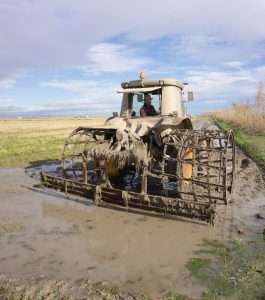
Fangueo is an ancient agricultural practice that consists of stirring and turning the soil of flooded rice fields. It is usually carried out during January and February, once the Perellonà phase has ended and before preparing the fields for sowing.
This work incorporates the remains of rice straw from the previous harvest into the soil, encouraging natural decomposition and returning nutrients to the land. It is a way of caring for the fields by following nature’s rhythms.
Why winter is key for fangueo
Winter is the ideal time for fangueo because low temperatures slow down biological activity, allowing organic matter to integrate into the soil gradually.
In addition, since there is no growing crop, rice fields can remain flooded for long periods without affecting plant development. It is a time of preparation, even if it often goes unnoticed.
Fangueo as a natural control method
One of the great benefits of fangueo is its ability to act as a natural method of controlling pests and weeds. By stirring the soil and keeping it flooded, the life cycles of many unwanted organisms are disrupted.
Thanks to this practice, the need for chemical treatments during the growing season is reduced, promoting a more environmentally friendly approach to rice cultivation.

The role of the Perellonà in l’Albufera
During winter, the Perellonà takes place — a controlled flooding process that connects the rice fields with the lake of l’Albufera. This renewal of water helps clean the fields, improve soil structure and encourage natural regeneration.
The Perellonà clearly shows how rice cultivation and the natural park’s ecosystem work together and benefit each other.
Fangueo and biodiversity
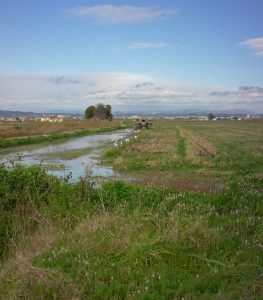
Flooded and worked rice fields become a temporary refuge for many bird species and microorganisms. This winter landscape, seemingly simple, is actually full of life.
Valencian rice is not grown in opposition to nature — it is part of it. Practices such as fangueo help maintain this balance.
How fangueo influences rice quality
Healthy soil is the foundation of good rice. Fangueo improves soil structure, facilitates nutrient absorption and allows the grain to grow evenly.
Although it may not be visible, the work carried out in winter is felt months later, when the rice reaches the kitchen: in its texture, its ability to absorb flavours and its behaviour during cooking.
At Arroz Tartana, we see fangueo as much more than an agricultural task. It is a way to protect the land, respect tradition and ensure that Valencian rice remains, generation after generation, a living part of our territory.